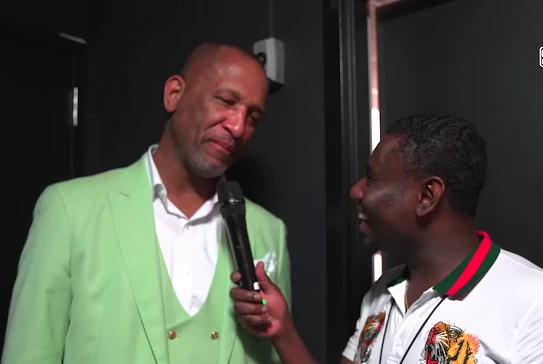
Reginald Cangé stands as one of the most distinctive and celebrated voices in the modern history of Haitian music. As a lead vocalist who has fronted legendary bands such as Zenglen, Fasil, and currently Zafem, his career offers a window into the evolution of the Haitian Music Industry (HMI).
His journey from the streets of Carrefour to international stages highlights the resilience required to succeed in a competitive global market.
For many enthusiasts of Konpa Direk, Cangé represents a bridge between the traditional rhythmic roots of the genre and a modern, lyrical sophistication. His ability to convey deep emotion, combined with a unique vocal timbre, has earned him a dedicated following across the Haitian diaspora.
Understanding his biography requires looking beyond just his discography and examining the cultural and political context that shaped his artistry.
This article explores the life of Reginald Cangé, tracing his origins in Port-au-Prince, his pivotal role in the 1990s roots music movement, and his rise to stardom in the United States. It examines the professional relationships, musical philosophies, and historical events that have defined his decades-long career.
Early Life in Carrefour and Family Background
Reginald Cangé was born on January 18, 1978, in Port-au-Prince, Haiti. He spent his formative years in Carrefour, a bustling municipality located on the southern outskirts of the capital. Carrefour has long been recognized as a cultural incubator, producing numerous musicians, artists, and intellectuals who have gone on to shape Haitian society.
He is the son of Michel Cange and Adeline Délima Cangé. Within his immediate household, Reginald grew up as the youngest of three brothers. However, his family structure was more extensive, as his father had other children, creating a large, extended family dynamic common in many Haitian households. This environment likely contributed to his social adaptability and interpersonal skills.
Growing up in Carrefour during the 1980s and 90s presented specific challenges. The area was vibrant but also faced significant infrastructure and security issues. Transportation difficulties and rising instability often made travel to downtown Port-au-Prince hazardous. Consequently, Cangé’s early worldview and social circles were heavily centered around the community life of Carrefour, fostering a strong sense of local identity that he carries to this day.
The Roots Era: ALOMANJAHYE and Political Context
Cangé’s entry into music coincided with a turbulent yet culturally rich period in Haitian history. In the early 1990s, the country was swept up in the democratic movement led by Jean-Bertrand Aristide.
This political shift sparked a cultural renaissance, particularly in the Mizik Rasin (Roots Music) genre, which blended traditional Vodou rhythms with rock and pop influences to express social consciousness.
While still a primary school student, Cangé began his musical journey playing drums for a Racine group called ALOMANJAHYE. The band was comprised largely of young academics and students inspired by the rhetoric of social change and empowerment prevalent at the time. This experience provided Cangé with his first exposure to the discipline required of a performing artist.
The political landscape shifted dramatically with the coup d’état in September 1991. The resulting instability made it dangerous for groups perceived as politically active to gather or perform. To ensure their safety, the members of ALOMANJAHYE, including Cangé, had to disband and maintain a low profile. This period of silence was a survival strategy, reflecting the harsh reality that artistic expression in Haiti is often inextricably linked to the political climate.

Musical Maturation and the FAXED Era
Despite the dangers of the era, Cangé’s mother supported his artistic pursuits, largely because his musical peers were viewed as disciplined and focused individuals. Unlike the stereotypes often associated with the nightlife industry, his early bandmates were studious and abstained from smoking and heavy drinking.
This parental approval allowed him to record his first studio sessions at the legendary Toto Laraque studio.
Following the dissolution of his first band, Cangé briefly stepped away from percussion to focus on his formal education. However, the musical pull of Carrefour remained strong. He eventually joined a new ensemble called FAXED. This group consisted of musicians from the neighborhood, many of whom would go on to become notable figures in the industry.
FAXED, like many young bands of that era, faced logistical and economic hurdles. While the group did not achieve long-term commercial longevity, it served as a crucial training ground. It allowed Cangé to refine his vocal abilities and stage presence, transitioning him from a drummer to a frontman capable of commanding an audience.
The Recruitment by Zenglen
The turning point in Reginald Cangé’s career occurred during a period of significant transition for Zenglen, one of the giants of the HMI. The band was reeling from the departure of their star singer, Gracia Delva, whose exit had left a massive void. The industry was rife with speculation about who could possibly fill such a prominent role.
The opportunity arose organically through a conversation with Henry Jean-Louis, a close associate of the band. During a discussion about the rumors surrounding Zenglen’s search for a vocalist, Cangé expressed a supreme confidence in his own abilities. He asserted that if the band were recruiting from Haiti, he would undoubtedly be their top choice. Unbeknownst to him, Jean-Louis had already been tasked by Zenglen’s management to scout for talent.
This confidence was validated shortly after during a performance at the “Tempo Plus” club in Pétion-Ville. Cangé delivered a flawless performance that captivated the audience. In the crowd was Georges Bellande, Zenglen’s manager at the time. Witnessing the crowd’s reaction and Cangé’s vocal control firsthand, Bellande moved quickly to secure the young singer, initiating the process that would bring Cangé to the international stage.
Negotiations and the Move to the Diaspora
The negotiation process between Cangé and Zenglen’s maestro, Jean-Richard Hérard (known as Richie), revealed Cangé’s professional maturity. Rather than focusing immediately on a salary, Cangé emphasized the life-altering nature of the move. Joining the band meant leaving Haiti, abandoning his university studies, and separating from his family, particularly his mother who relied on him.

Cangé viewed his talent not as a commodity to be sold, but as a contribution to a partnership. He famously resisted signing a restrictive contract initially, preferring to maintain his artistic freedom.
He compared himself to a bird that needs the freedom to fly, suggesting that his loyalty would be secured by mutual respect and a healthy working environment rather than legal bindings.
Ultimately, an agreement was reached. Cangé relocated to Florida, marking his formal entry into the diaspora music scene. The transition was marked by a spiritual and communal welcome, including prayers and meals with management, signaling the family-oriented culture of the band at that time. He immediately began studying the band’s repertoire in his new apartment, preparing for a debut that would silence critics.
Impact on the HMI and the Dual-Singer Dynamic
Reginald Cangé’s debut with Zenglen was a resounding success. His interpretation of the hit song “5 Sens” (5 Senses) showcased his vocal range and emotional depth, instantly winning over a skeptical public.
However, the band’s strategy involved more than just replacing one singer with another; they aimed to create a robust frontline that would not be vulnerable to a single departure.
Management sought to pair Cangé with a second vocalist. While there were discussions about recruiting a singer already established in the United States, Cangé advocated for the recruitment of Frérot, a talent from Haiti. He believed that their contrasting styles would create a powerful synergy.
This intuition proved correct. When Frérot eventually joined the band after resolving visa issues, the duo formed one of the most effective vocal partnerships in Konpa history. Cangé’s smooth, melodic delivery complemented Frérot’s energy, stabilizing Zenglen and propelling the group to a new era of dominance in the early 2000s. This period solidified Cangé’s reputation as a top-tier vocalist.
Artistic Philosophy and Legacy
Throughout his career, including his later work with the band Fasil and his current massive success with Zafem (alongside Dener Ceide), Cangé has maintained a reputation for integrity and intensity. He is known for his reluctance to engage in public feuds, known in the industry as “polemik,” although he is fierce in defending his respect and personal boundaries.
His departure from Zenglen and subsequent ventures were often fueled by a desire for artistic growth and fair treatment. Cangé views musical groups as institutions that, while comprised of imperfect humans, must operate with a level of professional respect. His journey reflects the broader narrative of Haitian artists who navigate the complex intersection of art, business, and migration.
Today, as the lead singer of Zafem, Cangé continues to influence the genre. His work is characterized by a deep respect for the Haitian Creole language, complex musical arrangements, and a performance style that prioritizes connection with the audience over mere spectacle.
He remains a pivotal figure for younger musicians emerging from neighborhoods like Carrefour, proving that talent combined with discipline can transcend borders.
FAQ
When and where was Reginald Cangé born?
Reginald Cangé was born on January 18, 1978, in Port-au-Prince, Haiti. He was raised primarily in Carrefour, a southern suburb of the capital known for its vibrant cultural scene. This environment played a significant role in his early musical development.
Which bands has Reginald Cangé performed with?
Cangé has been the lead vocalist for several prominent bands in the Haitian Music Industry. His career began with local groups like ALOMANJAHYE and FAXED in Haiti. He gained international fame with Zenglen, later formed the band Fasil, and is currently the lead singer of the highly acclaimed group Zafem.
How did Reginald Cangé join Zenglen?
Cangé was recruited to join Zenglen following the departure of Gracia Delva. After a standout performance at a club in Pétion-Ville, he was scouted by the band’s management. He subsequently moved to Florida to join the group, where he successfully auditioned and became a key member of their frontline.
What is the significance of his partnership with Dener Ceide?
The partnership between Reginald Cangé and Dener Ceide is the foundation of the band Zafem. While Ceide is a master composer, producer, and guitarist, Cangé provides the vocal execution and frontman charisma. Together, they have created a sound that blends classic Konpa elements with modern musicality, resulting in one of the most successful projects in recent HMI history.
Why did Cangé leave Haiti in the early 2000s?
Cangé left Haiti primarily to pursue his professional music career with Zenglen, which was based in the United States. While the move was a significant professional opportunity, it also required him to leave his family and university studies behind, a common sacrifice for Haitian artists seeking international success.
What is Reginald Cangé’s vocal style?
Reginald Cangé is known for a tenor vocal range that is both powerful and emotive. His style is often described as soulful, with a strong emphasis on lyrical clarity and melodic variation. Unlike some singers who rely heavily on animation and shouting, Cangé focuses on singing technique and emotional delivery to connect with his audience.